The Leader Nobody Talks About: Strong Enough to Be Vulnerable
I want to ask you something personal.
When was the last time you were genuinely vulnerable in a leadership context? Not the performed kind — not the humble-brag story about a mistake you already resolved with a bow on it — but actually, uncomfortably, cost-you-something vulnerable?
If that question makes you shift in your seat a little, good. It should. It does for me.
I've been sitting with Andy Crouch's book Strong and Weak, and it has gotten under my skin in the best possible way. Crouch is a thoughtful Christian writer who builds his whole case around one deceptively simple idea: that real human flourishing — and real leadership — requires BOTH authority AND vulnerability at the same time. Not one or the other. Both. Together.
That sounds almost obvious when you say it out loud. But the more I've sat with it, the more I've realized how rarely I've actually seen it lived out. And how rarely I've lived it out myself.
The Framework That Exposes Everything
Crouch draws a simple 2x2 grid. One axis is authority — which he defines as the capacity for meaningful action. The other is vulnerability — which he defines as exposure to meaningful risk. Put them together and you get four quadrants. And every leader you've ever known lives primarily in one of them.
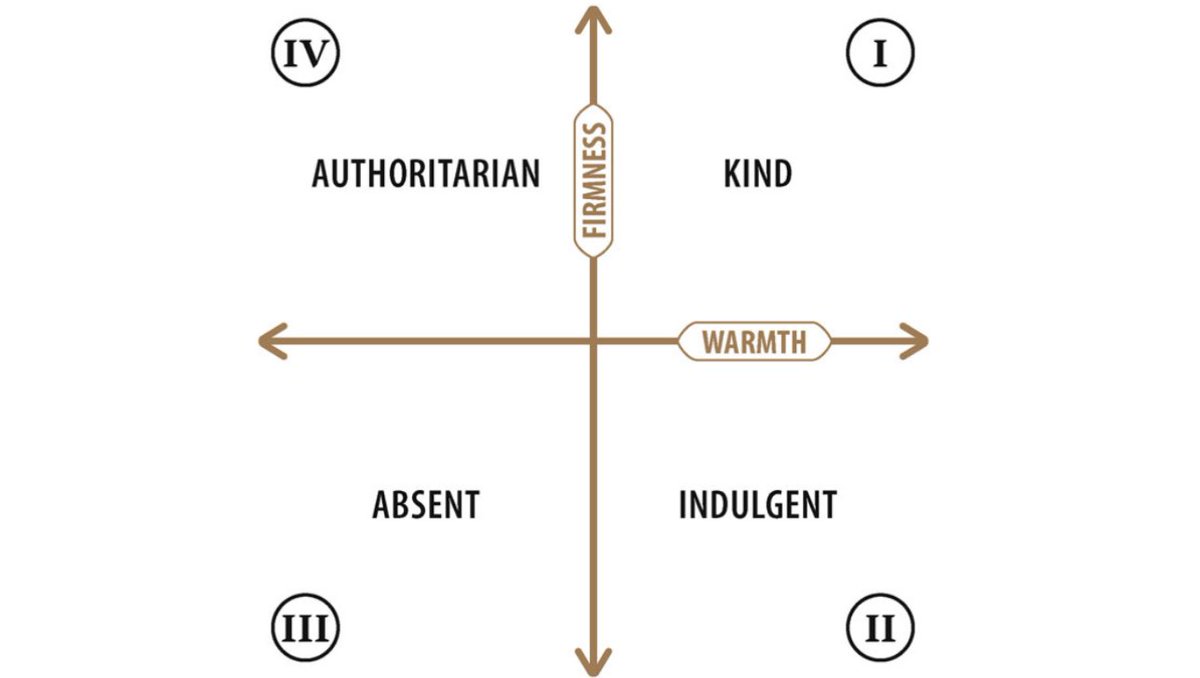
High authority, high vulnerability: that's flourishing.
That's the zone.
High authority, low vulnerability: that's exploiting.
You have the capacity to act, but you've insulated yourself from any real risk. You make the calls, but you don't bear the consequences. You lead, but you're not really in the game with your people.
Low authority, high vulnerability: that's suffering.
You're exposed to all the risk but have no meaningful power to act. This is the quadrant of oppression, burnout, and despair.
And then the worst one — low authority, low vulnerability: that's withdrawing. You've opted out. You've wrapped yourself in enough comfort, enough distance, enough control that nothing can really touch you. And you've stopped moving toward anything that matters.
Here's what hit me when I first looked at that grid: the two most dangerous quadrants for high-achieving leaders aren't suffering. They're exploiting and withdrawing. Because both of them are easy to mistake for competence.
The Seduction of Authority Without Risk
Let's be honest about something. As you build a business, a career, a platform — the natural trajectory is to accumulate authority while systematically eliminating risk. You hire people. You delegate. You build processes. You create buffer zones between yourself and failure. You get good at managing optics.
None of that is inherently wrong. That's just growth. That's stewardship.
BUT. (And this is a big but.) Crouch warns that authority without vulnerability is the most seductive and dangerous quadrant — not because it feels bad, but because it feels GREAT. You're in control. You're protected. You're winning, at least by the metrics that are easy to measure.
What you're actually doing is slowly becoming untouchable. And untouchable leaders — no matter how competent — eventually stop growing. They stop being trusted with the real stuff. Their teams learn to manage them rather than lead with them. And somewhere underneath the success, something starts going hollow.
I've seen it in leaders I respect. I've felt it in myself. The moment I started leading from behind my credentials instead of alongside my people — that's when I drifted into exploitation territory. Not maliciously. Just gradually. The way all drifting happens.
What Vulnerability Actually Costs
Here's where I want to push back a little on the way vulnerability gets talked about in leadership circles, because I think we've watered it down.
Vulnerability has become a buzzword. We conflate it with emotional transparency—sharing your unfiltered feelings, posting the behind-the-scenes struggle on social media, telling the story of how you almost gave up before you made it big. And some of that is good. But that's not what Crouch means.
Crouch says true vulnerability involves risking something of real and even irreplaceable value. That's a different thing entirely.
Vulnerability in leadership looks like going first when you don't know how it will land. It looks like making a decision you genuinely might be wrong about and owning it fully either way. It looks like investing deeply in a person on your team with no guarantee they'll stay. It looks like saying "I don't know" in a room where people expect you to know. It looks like letting your community see you in the process, not just the outcome.
That kind of vulnerability costs something real. It requires you to put down the armor. And the reason most leaders won't do it isn't because they're cowards. It's because they've built an identity around being the competent one, the strong one, the one who has it together. And that identity can become a cage.
Hidden Vulnerability: The Leadership Nobody Sees
One of the most striking ideas in Crouch's book is what he calls hidden vulnerability. He argues that one of the most important things leaders do is bear burdens and take on risks that no one else can fully see. Not for the recognition. Not to perform sacrifice. But to protect and empower the people they lead.
This is the 3am worry nobody posts about. The hard conversation you absorb on behalf of your team. The financial risk you take on so that your people can have stability. The reputation you put on the line when you advocate for someone who can't advocate for themselves.
Hidden vulnerability is the opposite of performance. It's the leader who quietly carries the weight so that others can move freely. And according to Crouch, this is one of the primary paths to the kind of flourishing that actually builds something that lasts.
I think about the leaders in my life who have done this for me — the ones who took hits I didn't even know about, who shielded me from fire while still equipping me to grow. You don't always know they're doing it in the moment. But you figure it out later. And it changes how you lead.
Jesus Is Still the Best Case Study
Crouch is a Christian writer, and he doesn't shy away from making Jesus the centerpiece of this whole framework. I'm glad he doesn't. Because when you look at the life of Jesus through this lens, the whole thing snaps into focus.
Here is a person who holds the highest conceivable authority — Creator, Son of God, the one in whom all things hold together — and who also enters into the deepest possible vulnerability. He becomes an infant. He gets hungry. He cries at the tomb of a friend. He sweats blood in a garden. He is mocked, beaten, and killed.
Maximum authority. Maximum vulnerability. At the same time. That is the template.
And what does it produce? The most transformative event in human history. A flourishing that extends to every broken, suffering, withdrawn, and exploited person who ever lived.
You and I are not Jesus. But we are made in his image. And we are called to lead in his pattern. Which means the willingness to step into meaningful risk — not recklessly, but purposefully — is not optional. It's the whole point.
So Where Are You on the Grid?
I want to close with the question Crouch's framework makes unavoidable.
Where do YOU actually live as a leader? Not where you aspire to live. Where do you actually spend most of your time?
Are you exploiting — holding authority but systematically removing yourself from risk? Have you built so many layers of insulation that nothing can really touch you anymore? And have you noticed the cost of that in the quality of your relationships and the depth of your impact?
Or are you withdrawing — doing the dance of leadership while not actually committing to anything that could fail? Playing it safe disguised as being strategic?
Or are you slowly, imperfectly, learning to hold authority and vulnerability together — using your capacity for meaningful action to take on meaningful risk for the sake of the people you serve?
That's the hard road. Crouch calls it flourishing. I call it the only kind of leadership worth chasing.
Read the book. Sit with the grid. Then do the uncomfortable thing.
Move up and to the right.