Surrendered Leadership Changes Everything
Surrendered Leadership Changes Everything
I've been thinking about Ben Sasse.
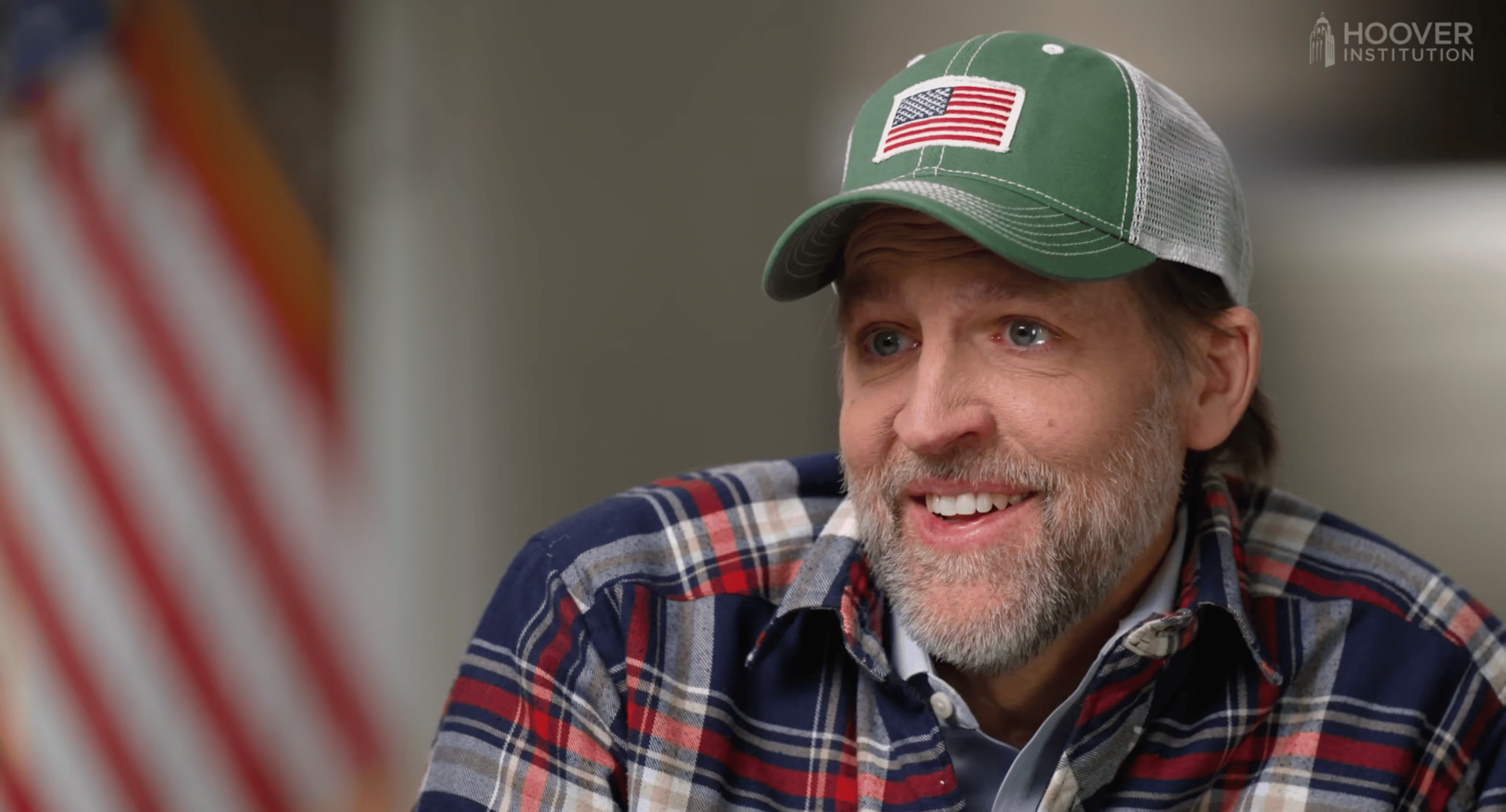
If you missed his60 Minutesinterview with Scott Pelley a couple weeks ago — stop what you're doing and go watch it. Seriously. Clear 20 minutes. It will recalibrate something in you.
Here's the context: Sasse is 54 years old. Former U.S. Senator. PhD in American history. One of the more intellectually serious people to serve in Washington in the last decade. He was diagnosed with stage-four pancreatic cancer in December 2025 and was originally given just three to four months to live. He's still here — due to what he calls a combination of providence, prayer, and an experimental drug. But he knows his time is short.
And what does a man say when he knows his time is short?
He tells the truth.
Sasse said something that stopped me cold:
"Death is wicked. Death is evil. But it's a touch of grace because it forces me to tell the truth. The lie I want to tell myself is that I'm the centre of everything and I'm going to be around forever. I can't."
Read that again. Slowly.
The lie I want to tell myself is that I'm the center of everything.
That's not just a reflection on mortality. That's a confession about the default operating system most of us are running every single day, in our homes, in our organizations, in our leadership. We are running the "I'm the center" program. And it is quietly destroying our effectiveness, our relationships, and our souls.
Surrender isn't weakness. It's clarity.
We've been sold a version of leadership that is fundamentally about control. Control the narrative. Control the outcome. Control the room. Control the perception. And when things slip out of control (which they always do) we double down. We grip harder. We spin faster. We perform more confidently than we actually feel.
And we call that leadership.
But here's what I've come to believe: the best leaders I know (and the best leaders I've studied) are marked by a peculiar kind of surrender. Not passivity. Not indifference. Not a shrug and a "whatever happens, happens." I mean a deep, settled conviction that they are NOT the center of the story. That the outcomes are not entirely theirs to control. That their job is to bring their absolute best — and then open their hands.
That's a completely different posture than what most leadership books sell you.
Surrender reorders your priorities.
One of the most striking moments in Sasse's interview was when he talked about his titles. He made clear that his accomplishments in the Senate pale in comparison to the other titles he holds: husband of more than 30 years, father of three children, neighbor and friend.
A U.S. Senator. Saying his Senate work is the lesser thing.
That's not false humility. That's a man who has been forced, by a terminal diagnosis, to finally see what was true all along. The urgent stuff crowded out the important stuff. It always does. Until something forces you to reckon with it.
His parting advice to his former colleagues in Washington was characteristically blunt: "The best thing you can do is be called dad or mom, lover, neighbor, friend."
That's surrender. That's letting go of the ego architecture we build around our titles and our outputs and our platforms and coming back to the relationships that actually constitute a life.
How many of us are leading organizations, building brands, climbing ladders? While the people closest to us are quietly wondering if they matter as much as the work does?
The posture changes everything.
Here's what I've found in my own coaching work: when a leader moves from a posture of control to a posture of surrender, three things happen almost immediately.
They listen differently. When you're not managing the outcome, you can actually hear what people are telling you. You're not filtering everything through "how does this affect me"...you're genuinely present to what's real.
They lead with less anxiety. Control is exhausting. The gap between what you can actually control and what you THINK you should control is the breeding ground for chronic leadership anxiety. Surrender collapses that gap. You do your part. You release the rest.
They make better decisions. Counter-intuitively, the leader who holds things loosely tends to think more clearly. They're not protecting an ego position. They're not guarding a narrative. They're just asking: what's actually true here, and what's the right thing to do?
This is not soft leadership. This is the hardest kind.
This is deeply biblical, and I won't apologize for saying so.
Sasse has said he feels a responsibility to use whatever time is left for the good of other people... to "redeem the time," as he frames it in a biblical sense.
That phrase, "redeem the time," comes from Paul's letter to the Ephesians. It's a phrase about urgency, yes. But it's also a phrase about surrender. Because you can only redeem the time if you've first accepted that the time is not yours. You are a steward, not an owner. Of your hours, your influence, your platform, your life.
Jesus modeled this constantly. "Not my will, but yours." That sentence is the most powerful leadership statement ever spoken. And it wasn't spoken from a position of weakness—it was spoken by someone who had ALL the power, choosing to hold it with open hands.
That's the template.
So what does this actually look like on Monday morning?
It looks like walking into a hard conversation without needing to win it.
It looks like releasing a project to your team and trusting them, actually trusting them, instead of hovering.
It looks like ending your day and letting go of what didn't get done, instead of carrying the weight of it into dinner with your family.
It looks like leading from your values instead of your anxiety.
Sasse put it simply: "We're all on the clock."
You don't need a terminal diagnosis to live like that's true. You just need the courage to surrender the illusion that you're in control of more than you actually are.
Lead from that place. Everything changes.